
Best Trailers for a Landscaping Business (By Crew Size)
Ask five landscapers the best trailer and you’ll get five setups — but the winning patterns are consistent. Here’s what actually works per crew size, from solo mowing routes to multi-crew operations.
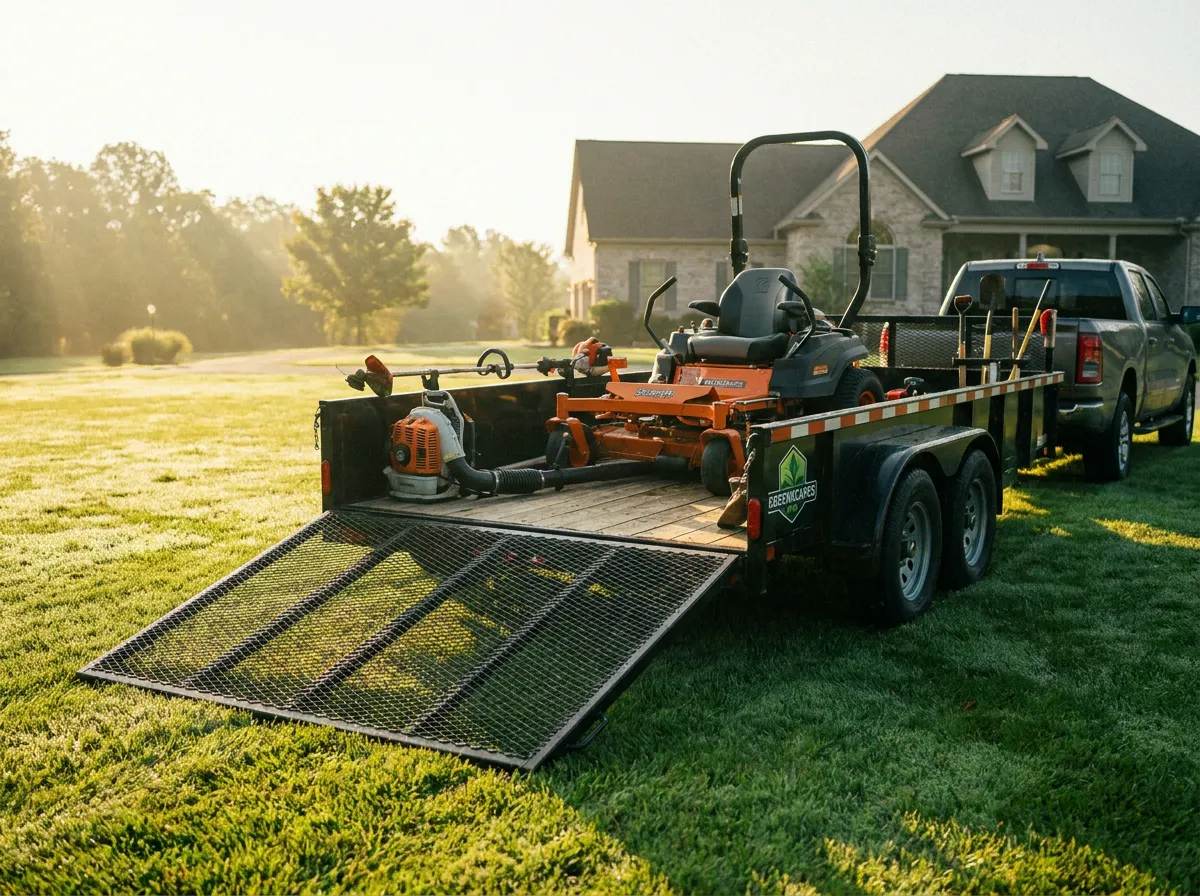
Solo operator: 6×12 utility with ramp gate
One zero-turn or a walk-behind plus trimmers: a single-axle 6×12 utility trailer with a mesh ramp gate loads in seconds, tows behind a half-ton easily and parks anywhere. Add trimmer racks and a toolbox and it’s a business.
Growing crew: 7×14 or 7×16 tandem
Two mowers plus gear needs tandem 5,200 lb axles, brakes, and deck length. High mesh sides carry mulch and debris on the same trailer. This is the class where GVWR math starts to matter — a loaded 7×16 is real weight.
The upgrade pros swear by: enclosed
A 7×16 enclosed trailer ends the load/unload ritual — equipment lives inside, locked, dry, with racks on the walls and your name on the side. Theft drops to zero and morning start time shrinks. The trade: more money, more tow.
Debris and hardscape crews: add a dump
Once you’re hauling green waste, gravel or paver base weekly, a 7×14 dump trailer pays for itself in shoveling you stop doing — spec it with the dump guide.
Florida note
Year-round season means year-round corrosion — rinse salt-air routes, and consider aluminum builds near the coast. We’re Tampa-based; see trailers in Tampa.
Build your crew’s setup.
Utility, enclosed and dump trailers matched to real landscaping work — inspected, free delivery to all 50 states.

About author

Add comment