
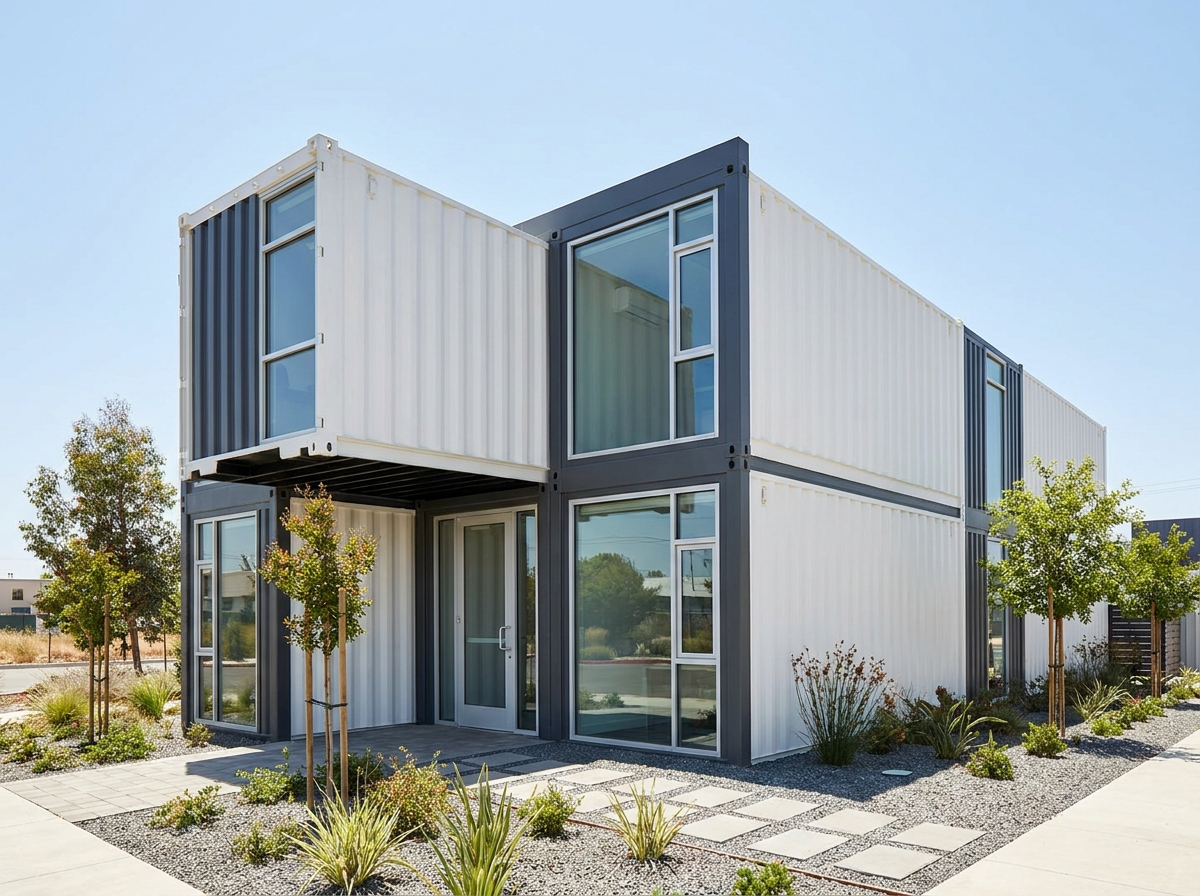
Shipping Container Dimensions & Sizes: The Complete Guide
Every standard shipping container is built to the same ISO footprint — 8ft wide — and the differences come down to length and height. Here are the exact dimensions for every common size, inside and out, plus how to pick the right one for your site.
Standard shipping container dimensions
| Size | Exterior (L×W×H) | Interior (approx.) | Capacity | Tare weight |
|---|---|---|---|---|
| 10ft | 10′ × 8′ × 8’6″ | 9’4″ × 7’8″ × 7’10” | ~563 cu ft | ~2,900 lb |
| 20ft standard | 20′ × 8′ × 8’6″ | 19’4″ × 7’8″ × 7’10” | ~1,172 cu ft | ~4,850 lb |
| 20ft high cube | 20′ × 8′ × 9’6″ | 19’4″ × 7’8″ × 8’10” | ~1,320 cu ft | ~5,200 lb |
| 40ft standard | 40′ × 8′ × 8’6″ | 39’6″ × 7’8″ × 7’10” | ~2,390 cu ft | ~8,270 lb |
| 40ft high cube | 40′ × 8′ × 9’6″ | 39’6″ × 7’8″ × 8’10” | ~2,694 cu ft | ~8,750 lb |
Door openings on standard containers are about 7’8″ wide × 7’6″ high (7’8″ × 8’6″ on high cubes) — measure your tallest item against the door, not the interior height. Full ISO specs live in the ISO 668 standard.
Standard vs high cube: the extra foot that matters
A high cube is one foot taller — 9’6″ outside, roughly 8’10” inside. That foot is why high cubes dominate for container offices and buildings (room for insulation, wiring, and ceilings), tall racking, and anything you’ll walk around in. For pure storage of boxes and tools, a standard height box saves money.
Which size do you actually need?
- 10ft — tight urban sites, tool storage, generator enclosures. Fits where a car parks. Browse 8ft & 10ft.
- 20ft — the everyday workhorse: home renovations, job sites, a 3–4 bedroom house worth of contents. Easiest to deliver. Browse 20ft.
- 40ft — bulk storage, equipment, inventory; the best cost per cubic foot. Needs ~100ft of straight truck access. Browse 40ft.
- High cube — conversions, racking, workspace. Browse high cubes.
Site & delivery: the numbers that trip people up
A tilt-bed truck needs straight, level clearance to slide the box off: plan on ~60ft of run for a 20ft container and ~100ft for a 40ft, plus 12ft of width and 14ft of overhead clearance (wires and branches). The container itself only needs level, well-drained ground — compacted gravel, concrete, or railroad-tie corners all work. Weight-wise, even an empty 40ft is over four tons, so it’s not moving once it’s down.
Container dimensions — FAQ
How much can I fit in a 20ft container? About 1,172 cubic feet — a typical 3-bedroom home’s contents, or roughly 10 standard pallets on the floor.
Are all containers exactly 8ft wide? Standard ISO boxes, yes. Specialty units (like some open-tops and flat racks) can vary — check each listing’s specs.
What does a loaded container weigh? A 20ft is rated to ~66,000 lb max gross; in practice road limits cap what you can legally haul loaded.
How much does each size cost? See our container cost guide — or the live delivered prices on every product page, free shipping to all 50 states included.
Still deciding? Call (813) 214-2216 or browse the full container range — we’ll confirm your site access before anything ships.

About author

Add comment