
Container Permits & Zoning: The 10-Minute Check
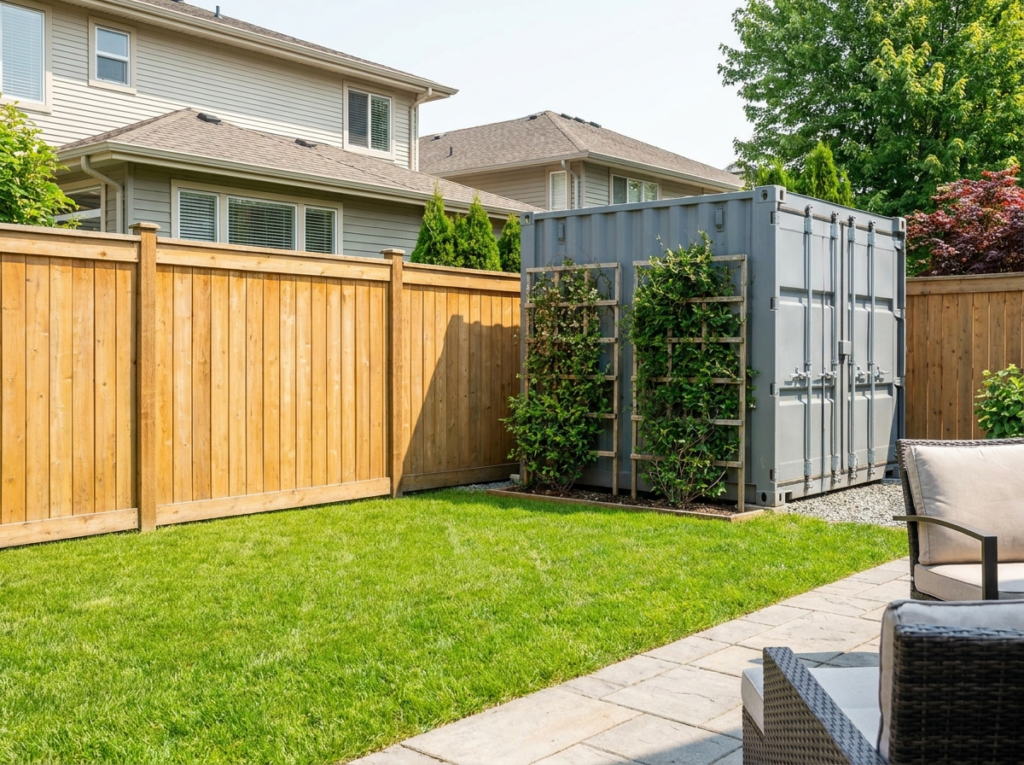
Most container placements never need a permit — but the ones that do get expensive when you skip the check. Rules live at three levels, and all three are fast to verify.
County / city zoning
Rural and agricultural zoning is usually permissive; residential zones often regulate “accessory structures” — which is what a container legally is in most codes. Common triggers: placement in a front setback, exceeding lot-coverage limits, or keeping a “temporary” structure past a time limit. Search “your county + accessory structure shipping container” or call the zoning office — they answer this question weekly.
HOA rules
HOAs are stricter than counties: many prohibit visible containers outright, others allow them behind fencing or for limited periods (a renovation, a move). Get it in writing from the board before delivery, not after a neighbor complains.
Permanent vs temporary use
Storage on blocks is one conversation; a container converted to an office with power and plumbing is another — that’s a building in code terms, with foundation, egress and inspection requirements. If you’re going the office route, budget for the permit path like any small structure, and see the ICC code resources your inspector will reference.
Practical tips that keep you out of trouble
- Place behind the front building line and it stops being the neighborhood’s business.
- Screening (fence line, hedge) defuses most HOA objections.
- Keep the delivery receipt — some counties treat containers as personal property until anchored.
- In Florida and other wind-zone states, anchoring rules may apply to permanent placements — ask us, we deal with this daily from our Tampa base.
Rules checked? Pick your unit.
Containers, cabins and offices with honest condition grades and free delivery to all 50 states.